What is Amazon FBA? The simple definition (with real examples)
What is Amazon FBA exactly? If you're asking that question, you're in the right place. In 5 minutes, you'll understand how this model lets thousands of sellers generate online income without managing stock, shipping or customer service themselves. We'll explain everything, simply.
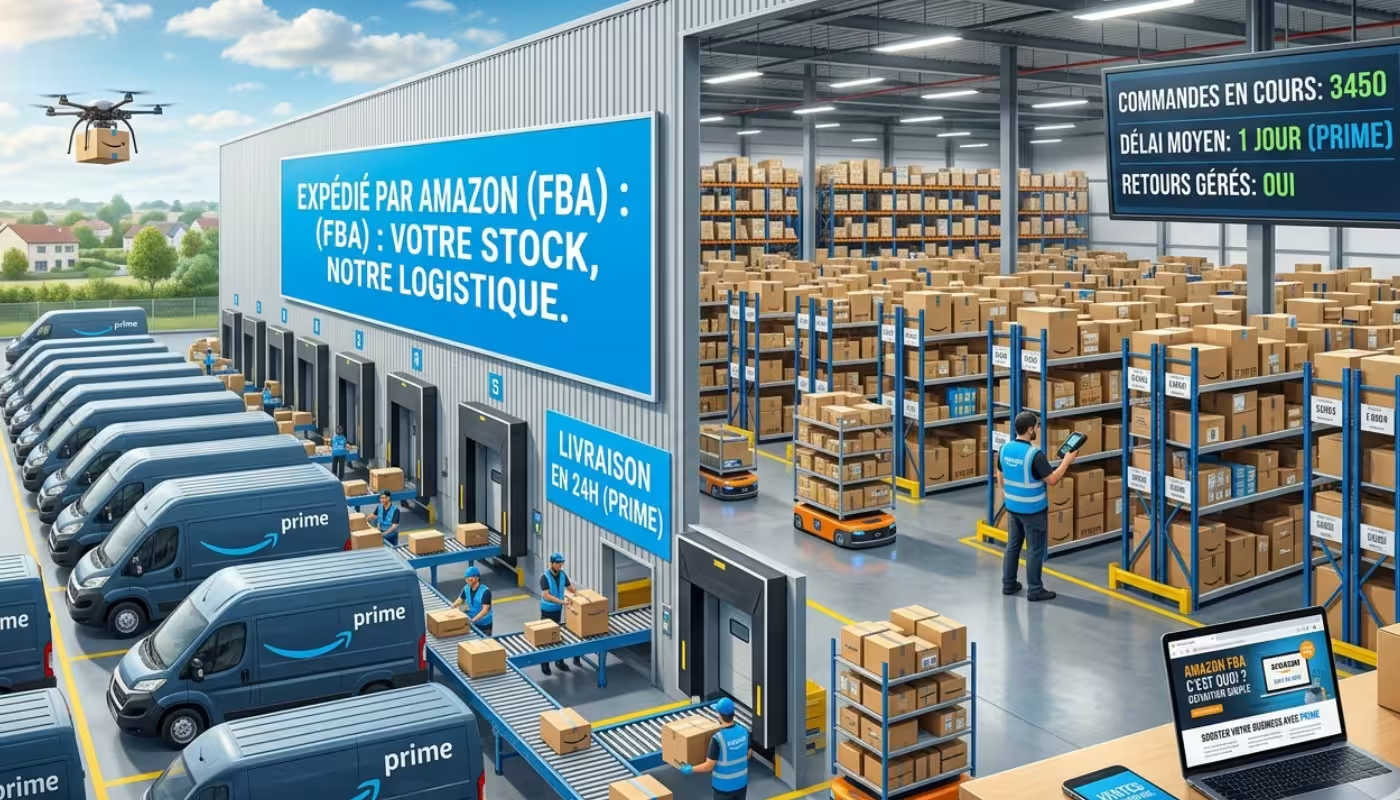
Amazon FBA meaning: the definition in one sentence
FBA stands for Fulfillment by Amazon. In plain terms, it means Amazon stores your products in their fulfilment centres, ships orders directly to your customers, and handles after-sales service (returns and refunds).
In short, you focus on the business side (finding a great product, optimising your listing, running your ads) and Amazon takes care of all the logistics. That's what makes this model accessible even if you have no warehouse, no employees and no logistics experience.
Concrete example: say you sell a kitchen accessory for £24.99. You buy 500 units from your supplier, send them to an Amazon fulfilment centre in the UK, and that's your job done. Every time a customer orders, Amazon picks, packs and ships the parcel within 1–2 days (Prime). You receive payment, minus Amazon's fees.
How does Amazon FBA actually work?
The process breaks down into 5 simple steps, from sending your stock to handling returns.
You send your stock to Amazon
You prepare your products (labelling, packaging) and ship them to an Amazon fulfilment centre. You can send cartons from home, directly from your supplier or via a freight forwarder.
Amazon stores your products
Your products are received, scanned and shelved in Amazon's warehouse. They're ready to ship the moment a customer places an order, 24 hours a day, 7 days a week.
A customer places an order
Your product appears on Amazon.co.uk with the Prime badge. The customer orders just like any other Amazon product, with the confidence that comes from the Prime delivery promise.
Amazon ships the parcel
Amazon picks the product from the warehouse, packs it and ships it to the customer, typically within 1–2 working days. You don't have to do anything — no trips to the post office, no parcels to prepare.
Amazon handles returns and customer service
If a customer wants to return a product, Amazon manages the entire process: receiving the return, issuing the refund and restocking the item if it's in good condition. You never deal with customer emails.
FBA vs FBM: what's the difference?
Amazon offers two fulfilment methods. Here's a clear comparison to help you choose.
| Criteria | FBA (Fulfillment by Amazon) | FBM (Fulfillment by Merchant) |
|---|---|---|
| Storage | Amazon stores your products | You store it yourself (garage, warehouse) |
| Shipping | Amazon packs and ships | You ship every order yourself |
| Customer service | Managed by Amazon | You handle emails and returns |
| Prime badge | Yes (automatic) | No (unless Seller Fulfilled Prime) |
| Fees | FBA fees (storage + fulfilment) | No FBA fees, but postage costs |
| Scalability | Excellent | Limited by your own capacity |
| Best for | Sellers who want to scale | Bulky products, low volume |
For the vast majority of sellers, FBA is the recommended choice: less operational work, greater visibility thanks to the Prime badge, and the ability to scale quickly.
The advantages of Amazon FBA
Prime badge
Your products display the Prime logo, which significantly boosts buyer trust and your conversion rate. Prime members account for the majority of sales on Amazon.co.uk.
Zero logistics hassle
No more storing boxes at home or making daily trips to the post office. Amazon handles storage, packing, shipping and returns. You can run your entire business from your laptop.
Scalability
Whether you're selling 10 or 10,000 units a month, Amazon absorbs the volume without any extra effort from you. You can also sell across Europe from a single account using the Pan-European FBA programme.
Amazon FBA disadvantages and fees
Amazon FBA is not free. In exchange for its logistics service, Amazon deducts fees from each sale. Understanding them clearly is essential for calculating your real margin.
Referral fee: between 8% and 15% of the selling price, depending on the product category. Jewellery can reach 20%.
FBA fulfilment fees: calculated based on the weight and dimensions of your product. Example: roughly £2.50–£4.50 for a small standard parcel.
Monthly storage fees: charged per cubic foot (or cubic metre for EU). Higher rates apply October–December during peak season.
Professional seller subscription: £25/month ex-VAT (essential for serious selling — unlocks Buy Box and Amazon Ads).
Long-term storage fees: penalty applied if your stock remains in an Amazon fulfilment centre for more than 365 days.
VAT obligations: as a UK seller you must be VAT-registered once you exceed the £90,000 threshold. If you sell into EU markets, separate VAT registration may also be required.
Tip: before you start, use our free Amazon FBA calculator to estimate your real net margin. You can also check our complete guide to Amazon FBA fees in the UK for a line-by-line breakdown.
Is Amazon FBA right for you?
Ideal profile
- • You have between £2,000 and £5,000 to invest to get started
- • You're looking for a scalable business, not an extra job
- • You're willing to learn digital marketing and data analysis
- • You want an automated system where Amazon handles logistics
- • You have a long-term vision and the patience to build something real
- • You have (or will set up) a limited company via Companies House
Not the right fit if...
- • You're looking to make money without investing any
- • You want results within days
- • You're not prepared to learn the tools and strategies
- • You're uncomfortable with entrepreneurial risk
- • You'd rather have a guaranteed salary than growth potential
You recognise yourself in the ideal profile but don't know where to start? A discovery call can help you get clarity.
Discover my personalised coaching →Frequently asked questions about Amazon FBA
How much do you need to invest to start Amazon FBA in the UK?
For a serious first launch, budget between £2,000 and £5,000. This covers your initial stock purchase, listing creation, your first PPC advertising campaigns and the Professional seller subscription at £25/month ex-VAT. Some people start with less, but a tight budget significantly limits your chances of success. You should also factor in UK import duty and VAT on goods brought in from overseas suppliers.
Can you make a living from Amazon FBA in the UK?
Yes, many UK sellers live from Amazon FBA. Reaching a comfortable income typically takes several months of work and one or more products generating consistent sales on Amazon.co.uk. Successful sellers often reach £5,000 to £20,000 in monthly revenue, with a net margin of 20–35% after all fees and costs.
Does Amazon FBA work for complete beginners?
Yes, Amazon FBA is accessible to beginners. The model is straightforward: you find a product, send it to Amazon, and Amazon handles the rest. That said, succeeding does require learning: market research, listing optimisation, PPC management. A good coaching programme can dramatically accelerate your learning curve and help you avoid costly mistakes.
What is the difference between Amazon FBA and dropshipping?
With Amazon FBA, you buy your stock upfront and Amazon stores it in their fulfilment centres. With dropshipping, you never hold stock: the supplier ships directly to the customer. FBA offers faster delivery (Prime), better quality control and higher margins, but requires a larger upfront investment. Amazon's dropshipping policy is also quite restrictive, making FBA the more reliable long-term model for UK sellers.
Ready to start on Amazon FBA?
Now you know what Amazon FBA is and how it works. The next step? A 15-minute discovery call to assess your project, define your niche and build a concrete action plan tailored to the UK market. No commitment required, and you'll get actionable insights regardless of whether we work together.
15 minutes — no commitment